Vertical vs. Horizontal Laminar Flow: Choosing the Right Clean Bench for Your Lab
When selecting a clean bench or laminar flow hood, one of the most critical decisions is choosing between vertical and horizontal airflow configurations. Both provide ISO Class 5 (Class 100) environments, but they serve different applications, safety requirements, and ergonomic needs. Understanding their differences ensures optimal performance, user protection, and process integrity.
How Laminar Flow Works
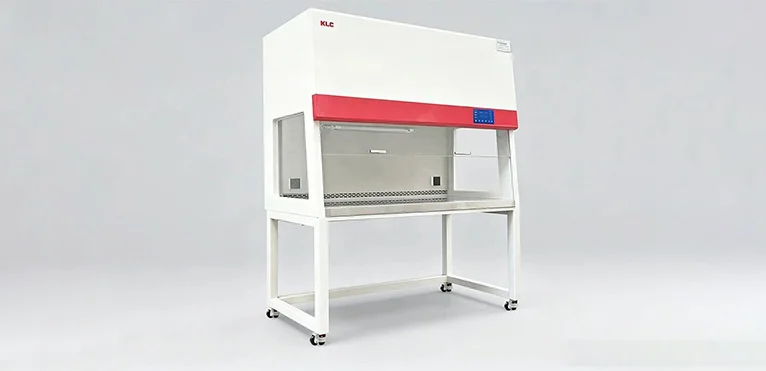
Laminar flow refers to air moving in parallel layers at uniform velocity, typically through a HEPA or ULPA filter. This unidirectional airflow sweeps away particulates, maintaining a sterile workspace. The direction of this flow—vertical (top-down) or horizontal (back-to-front)—defines the bench’s behavior and suitability.
Vertical Laminar Flow Benches
Airflow Pattern
Air is drawn from above, passed through a ceiling-mounted HEPA filter, and flows downward over the work surface before exiting through perforations in the base or front grille.
Key Advantages
- User Protection: Downward airflow creates an air curtain that helps prevent contaminants from escaping toward the operator.
- Space Efficiency: Requires less depth; ideal for labs with limited floor space.
- Ergonomics: Unobstructed front access allows natural hand positioning and better visibility.
- Cross-Contamination Control: Less likely to blow particles from one sample to another when working with multiple items.
Common Applications
- Cell culture and tissue engineering
- Microbiology and aseptic media preparation
- Pharmaceutical compounding (non-hazardous)
- Electronics assembly where top-down particle removal is preferred
Limitations
- Turbulence can occur if tall equipment blocks downward airflow.
- Not suitable for hazardous materials (no containment; use biosafety cabinets instead).
Horizontal Laminar Flow Benches
Airflow Pattern
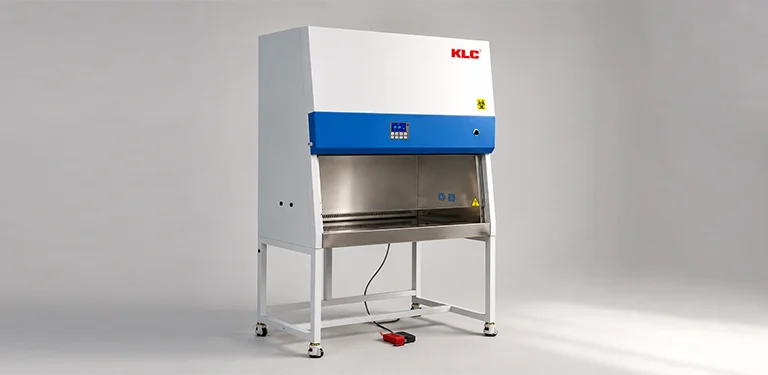
Air enters from the rear, passes through a back-mounted HEPA filter, and flows horizontally across the work surface toward the operator.
Key Advantages
- Superior Product Protection: Direct, uninterrupted airflow across the work zone minimizes turbulence over sensitive materials.
- Ideal for Sensitive Processes: Excellent for open-vessel work where consistent unidirectional flow is critical.
- Simpler Maintenance: Filter replacement often easier due to rear access.
Common Applications
- Sterile filtration and media filling
- Optical lens and semiconductor handling
- Analytical instrument sample preparation
- Any process requiring maximal product protection with low bioburden risk
Limitations
- No User Protection: Air blows directly toward the operator—unsuitable for biohazards, toxins, or volatile chemicals.
- Larger Footprint: Requires more bench depth to maintain proper airflow dynamics.
- Cross-Contamination Risk: Particles from upstream items may be carried downstream to other samples.
Critical Comparison Table
Feature | Vertical Laminar Flow | Horizontal Laminar Flow |
Airflow Direction | Top → Bottom | Back → Front |
User Safety | Moderate (air curtain) | None (air toward user) |
Product Protection | Good | Excellent |
Space Requirement | Compact | Deeper footprint |
Cross-Contamination Risk | Lower | Higher (downstream carryover) |
Ergonomic Access | Unobstructed front | May require reaching into airflow |
Best For | General lab work, cell culture | High-purity product handling |
⚠️ Safety Note: Neither vertical nor horizontal clean benches are designed for hazardous biological agents, radioactive materials, or toxic chemicals. Use certified biosafety cabinets (BSCs) or chemical fume hoods for such applications.
Selection Guidelines
Choose Vertical Laminar Flow if:
- You prioritize user comfort and moderate protection.
- Workspace depth is limited.
- You work with multiple samples simultaneously.
- Your application involves non-hazardous biological materials.
Choose Horizontal Laminar Flow if:
- Product sterility is paramount and user exposure is not a concern.
- You handle open containers with highly sensitive contents.
- Process validation requires minimal airflow disruption over the work zone.
- You work exclusively with inert or non-hazardous substances.
Compliance & Standards
Both configurations must comply with relevant standards:
- ISO 14644-1: Cleanroom air cleanliness classification
- NSF/ANSI 49: Biosafety cabinet performance (for BSCs only)
- EU GMP Annex 1: Aseptic processing guidelines
- USP: Compounding standards (note: clean benches ≠ containment devices)
Always validate airflow velocity, filter integrity, and particle counts during installation and annually thereafter.
Final Thoughts
The choice between vertical and horizontal laminar flow isn’t about which is “better”—it’s about fit-for-purpose. Misapplication risks contamination, compromised data, or safety incidents. Conduct a thorough risk assessment considering your materials, processes, regulatory environment, and operator workflow before investing. When in doubt, consult a certified cleanroom engineer or industrial hygienist to ensure alignment with both scientific and safety requirements.